
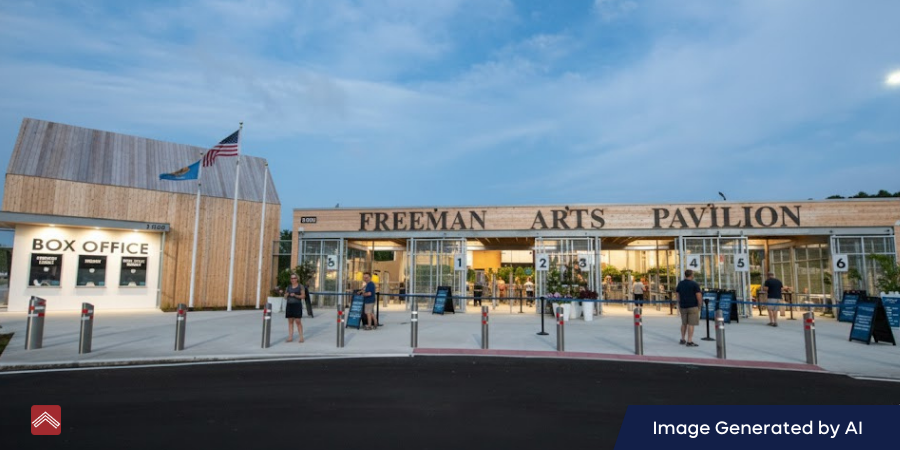
The Coastal Delaware arts scene is entering a new era as Freeman Arts Pavilion advances through its most ambitious transformation yet.
What began as a vision in 2021 has now evolved into a multi-year redevelopment that blends community impact, expanded programming, and a completely reimagined guest experience.
With construction well underway and a grand opening anticipated for July 2026, visitors can expect a venue that stays true to its intimate, relaxed atmosphere.
It embraces state-of-the-art upgrades designed to serve larger audiences and a growing regional demand for the arts.
A New Stage and a New Era for Performances
One of the most anticipated milestones is the construction of the new permanent stage and backstage facilities.
The 42-foot-tall, 100-foot-long structure sits on the south side of the current seating lawn and is designed to enhance every performance with advanced lighting and sound systems.
This investment marks a pivotal step in the pavilion’s evolution, allowing the venue to host a wider range of artists while maintaining the welcoming feel that longtime guests value.
The new layout also improves how the space interacts with its surroundings.
By rotating the stage nearly 90 degrees, future performers will retain the venue’s iconic sunset backdrop without facing direct sunlight.
This refinement underscores the project’s focus on guest comfort and performance quality, while preserving the natural setting that defines the Freeman experience.
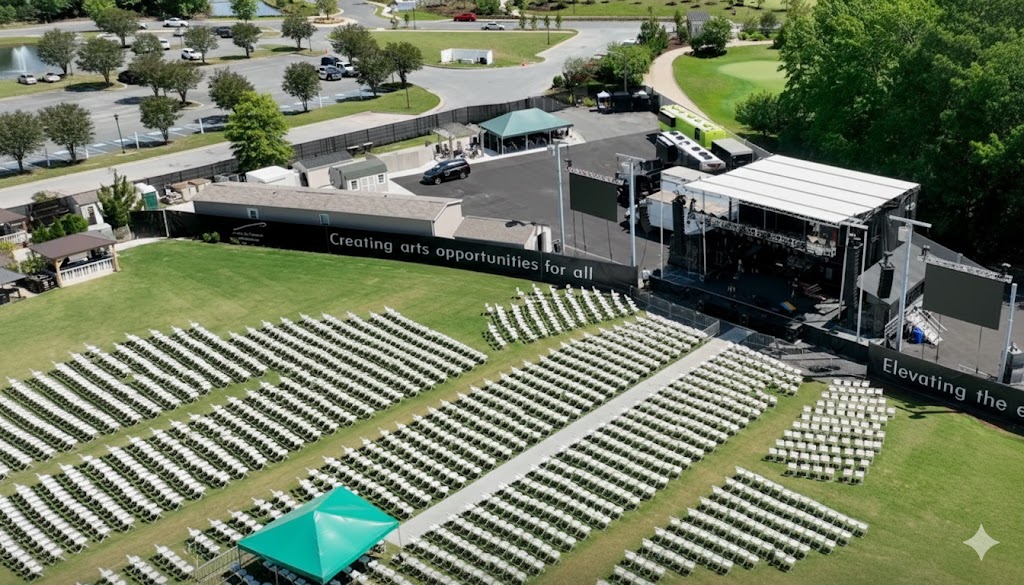
Image Generated by AI
Reimagined Seating and Enhanced Sight Lines
The redesign introduces a dynamic mix of seating options to meet the needs of a diverse audience.
The terraced lawn is being reshaped with a more dramatic slope, creating significantly better sight lines from every section.
The Grand Green, now planned with a nearly 30-foot grade, will provide a clearer view of performances, while its new orientation and upgraded paths will improve the flow of movement around the venue.
Guests can expect several types of seating that offer flexibility and comfort for different show styles, including:
- Floor seating with chairs for a close, seated experience
- Standing-room-only areas near the stage for high-energy events
- Permanent seating in reserved sections
- Terraced configurations with a mix of movable and fixed seats
- General admission lawn seating
This wide range of options reinforces the Pavilion’s mission of accessibility, ensuring that audiences can enjoy performances in the way that suits them best.
Improving Access, Amenities, and Guest Comfort
Accessibility and guest convenience are central to the upcoming improvements.
The updated design introduces more paved paths, gentler slopes for wheelchair access, and accessible seating close to major walkways throughout the venue.
An assistive listening system and other enhancements are also planned to ensure a comfortable experience for all.
Food, beverage, and restroom offerings are also being expanded.
The Lower Lawn will feature The Canteen with a full menu, and a redesigned Food Truck Court is scheduled for 2026.
Air-conditioned restrooms on the Lower Lawn remain available, while restroom trailers and other temporary amenities will serve guests until later construction phases introduce permanent structures.
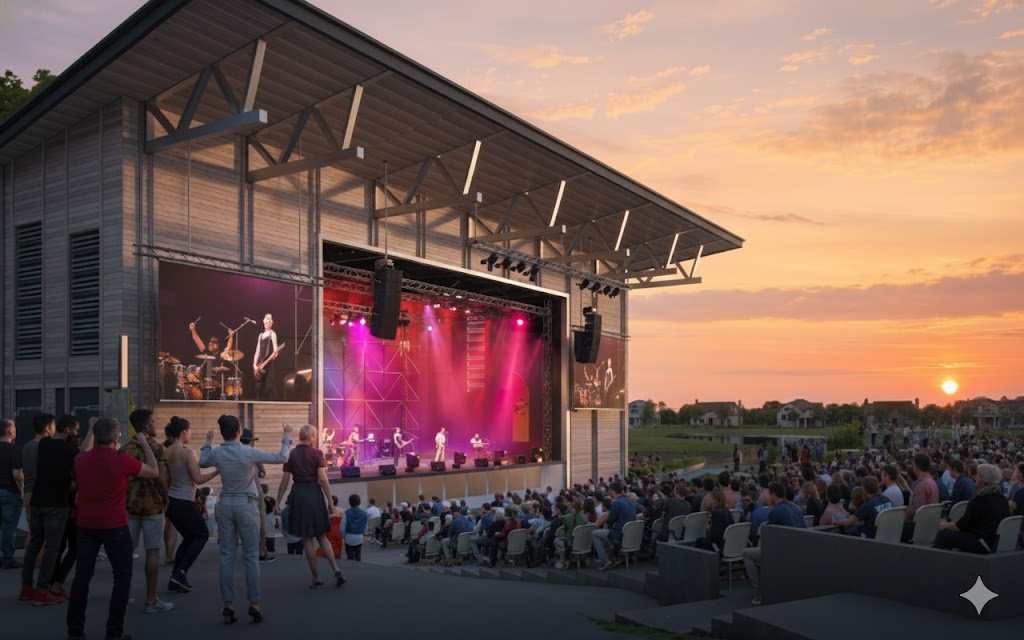
Image Generated by AI
Expanding Impact & Mission Behind Their Why
Freeman Arts Pavilion is more than a performance venue, it is a cultural anchor with a growing regional influence rooted in purpose and community.
The planned expansion will allow the Pavilion to welcome more than 150,000 audience members annually, increasing capacity to 4,000 while extending the performance season.
This growth also creates additional space for the Joshua M. Freeman Foundation’s highly regarded Arts Education program, enabling it to reach more schools, families, and communities across the region.
At the heart of this expansion is the enduring legacy of Josh Freeman, whose passion for the arts and deep care for people continue to shape the Pavilion’s mission.
Known for making everyone feel welcomed, valued, and seen, Freeman believed the arts should be accessible to all.
That belief lives on in every concert under the stars, every child introduced to the arts, and every gathering where music, storytelling, and community come together.
Through the Foundation’s work, more than 130,000 people each year experience the moments Freeman cherished most, those that inspire, heal, and foster meaningful connection.
Since 2008, more than one million individuals have been impacted through programs and performances that reflect his vision.
The Pavilion’s economic impact further underscores its importance to the community.
Since 2008, the Foundation has generated more than $101 million for the local economy, with an estimated $1.90 returning to the community for every dollar spent by the venue.
Visitors also contribute approximately $102 per day to surrounding businesses, reinforcing the Pavilion’s role as a significant driver of local economic activity.
Whether through live performances or free arts programs in schools and community spaces, the continued growth of Freeman Arts Pavilion reflects both a thriving cultural ecosystem and a legacy that continues to bring people together through the arts.
Parking, Transportation, and the Guest Journey
With a larger capacity comes a more robust transportation plan.
Off-site parking, introduced in 2022, remains a key component and includes shuttle service from a lot located about 1.5 miles from the venue.
Additional parking options now include expanded bike and golf cart areas, and the Jolly Trolley offers pay-per-seat transportation from Lewes, Rehoboth, Dewey, and Bethany for select shows.
On-site parking continues to be free but limited, encouraging guests to carpool, bike, or use ride-share services when possible.
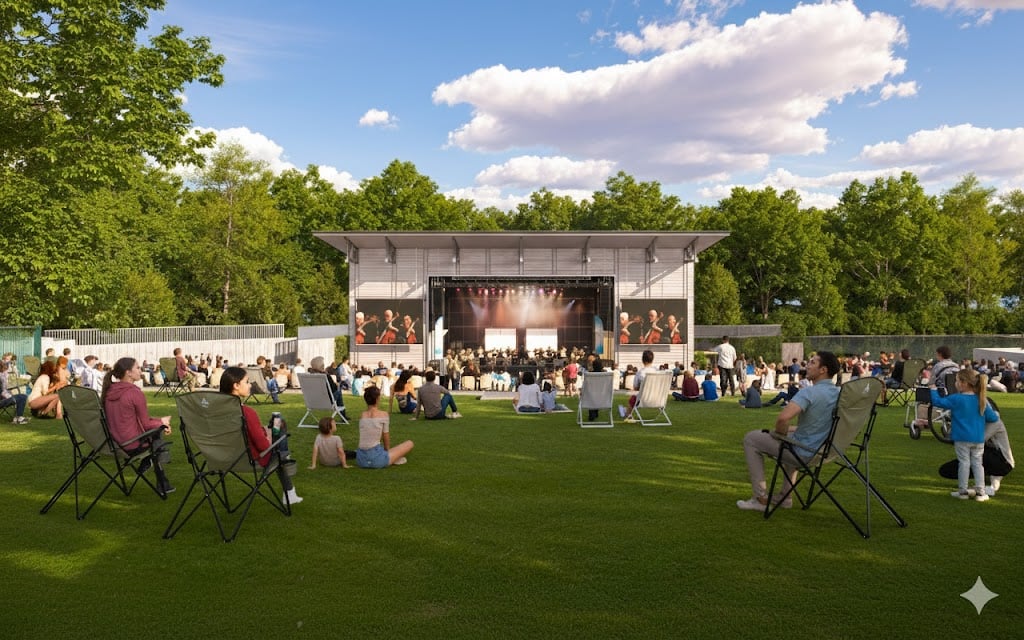
Image Generated by AI
A Community-Driven Vision
This transformation is powered by the community itself. As a nonprofit venue, Freeman Arts Pavilion relies on public support to complete its capital campaign and bring the full project to life.
Contributions from residents, local businesses, and visitors help sustain the Pavilion’s mission of delivering meaningful arts experiences that unite people of all ages.
That mission continues to come alive through upcoming events like the January Author Chat featuring Elise Zoller and her work on America’s Route 66, as well as February’s The Art of the Love Song, both hosted at the Carl M. Freeman Foundation Office Building.
These programs highlight the Pavilion’s year-round commitment to storytelling, music, and creative connection beyond the summer concert season.
To stay updated on local developments like this and more Coastal Delaware news, explore the rest of our blog and join the conversation by dropping your thoughts on this renovation upgrade in the comments!
Sources: Freeman Arts Pavilion Website, Freeman Arts Pavilion FB, Delaware Business Times, Delaware Public Media
Check out this article next