
Planning for growth has become one of Delaware's biggest priorities as the state's population continues to increase, especially in Sussex County.
Throughout the first few weeks of 2026, state officials introduced a series of initiatives that will influence how infrastructure, housing, transportation, and land use decisions are made for years to come.
Why Delaware Updated Its Growth Strategy
The conversation began when lawmakers returned to Dover for the 2026 legislative session with several major priorities, including property reassessments, education funding, healthcare costs, and how Delaware manages future growth.
Alongside those discussions, the state continued work on updating its long-term planning framework, known as the Delaware Strategies for State Policies and Spending.
This document serves as Delaware's primary guide for state investments and helps determine where public funding is directed for projects such as:
- Roads and transportation improvements
- School construction and funding
- Public transit and trails
- Economic development
- Open space and farmland preservation
- State support for local development projects
Although counties and municipalities make their own land use decisions, the state funds much of the infrastructure needed to support growth, making this strategy an important part of future planning.
Why Sussex County?
State officials noted that more than one quarter of recent construction in Sussex County occurred in rural areas where the state had not planned to accommodate significant development.
Existing zoning has also contributed to rural expansion, while the county continues to attract retirees and new residents looking to live near Delaware's beaches.
According to the State Strategies plan, Delaware is expected to need approximately:
- 2,400 new homes every year through 2030
- More than 55,000 additional housing units statewide by 2050
Much of that demand is expected to occur in Sussex County, making coordinated planning increasingly important.
The state says future housing will need to include a variety of home types and price points while avoiding additional strain on infrastructure and public services.
Governor Meyer Makes the Plan Official
On January 30, Governor Matt Meyer signed a new Executive Order No. 16, officially certifying the updated 2025 Delaware Strategies for State Policies and Spending.
The order directs state agencies to use the updated strategy when making decisions involving infrastructure, transportation, economic development, land preservation, and other public investments.
The goal is to better coordinate state spending with local planning while supporting smart growth, workforce housing, environmental protection, and stronger downtowns.
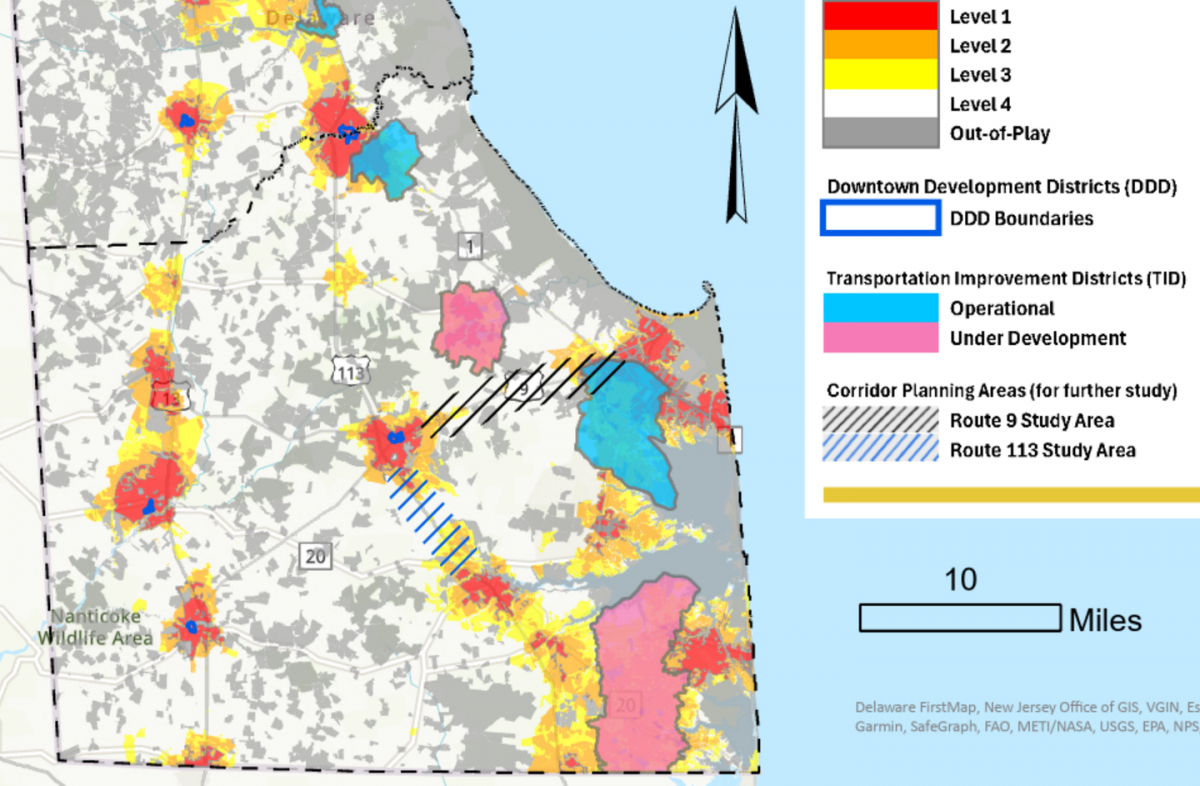
Image: Sussex County
What Changes Under the Executive Order
The Executive Order introduces several initiatives designed to improve how Delaware plans for future growth.
Corridor Planning Areas
One of the biggest changes is the creation of Corridor Planning Areas along major transportation routes.
These planning areas are intended to address traffic congestion, safety, accessibility, environmental concerns, and future development at the same time rather than treating each issue separately.
Seven-Month Planning Partnership With Sussex County
Beginning in January 2026, the state launched a seven-month planning effort with Sussex County.
The collaboration is designed to help shape the county's next Comprehensive Plan while identifying where future development can be supported with the necessary roads, utilities, and public services.
State Smart Growth Visioning Process
The Executive Order also creates a statewide Smart Growth Visioning process throughout 2026.
State agencies, local governments, and other partners will evaluate:
- Population trends
- Land use patterns
- Infrastructure investments
- Existing planning incentives
- Climate preparedness
- Long-term development priorities
The process is also intended to strengthen planning resources for all 60 local jurisdictions across Delaware.
Expansion of Downtown Development Districts
Another part of the order expands Delaware's Downtown Development District Program from 12 designated districts to the maximum allowed by law of 15.
The program offers incentives that encourage commercial, residential, industrial, and mixed-use projects aimed at revitalizing downtown areas and supporting local job growth.
Faster Review Process for Development Projects
The Executive Order also modernizes Delaware's Preliminary Land Use Service, commonly known as PLUS.
The updated "PLUS 2.0" initiative is designed to streamline reviews, improve technology, expand fast-track options for priority projects such as housing, and work toward completing reviews within 45 days.
Looking Ahead
While many of these changes focus on long-term planning rather than immediate development, they represent an important shift in how Delaware intends to manage future growth.
With Sussex County expected to continue leading the state's population increase, coordination between local governments and state agencies will likely play a larger role in determining where new housing, infrastructure, and public investment take place over the coming years.
Follow our blog for more updates on development, planning, and real estate news across Coastal Delaware.
Sources: WHYY, Coast TV, Coastal Point, Delaware Government
Have any questions about our blog(s), the Coastal Delaware real estate market, or local life in our beautiful beach towns? Do you think there is something we should write about? Did you see an event coming up that we should know about? Shoot us an email at [email protected] or give us a call at (302) 212-0074. We would love to hear from you!
Check out this article next