

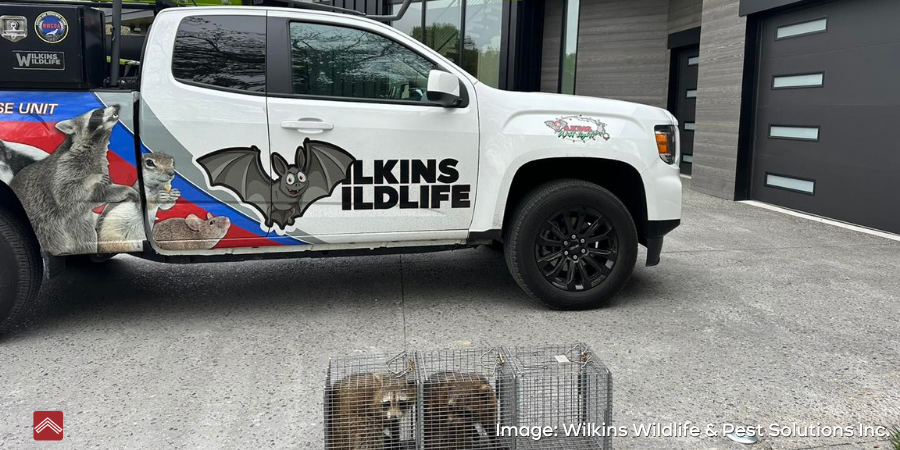
Young animals become more active and visible during the summer as they explore their surroundings, learn to find food, and spend more time away from dens and nesting areas.
This can lead to more sightings around yards, sheds, decks, crawlspaces, tree lines, gardens, and fence rows of homeowners.
Why Young Wildlife Is More Visible in Summer
Juvenile animals must learn how to move, feed, climb, hide, and react to potential threats. This learning period can bring them closer to yards, gardens, sheds, decks, crawlspaces, wooded edges, and homes in general.
Fox kits may play outside their den before becoming fully independent. Young groundhogs can appear near burrow entrances, squirrels may explore branches and rooflines, and young skunks or raccoons may follow adults while searching for food.
Properties are more likely to attract this activity when they provide easy access to food, shelter, and cover.
Common attractions include pet food, trash, bird seed, gardens, brush piles, overgrown areas, and openings beneath structures.

AI-Generated Image
Signs of a Fox Den Near Your Home
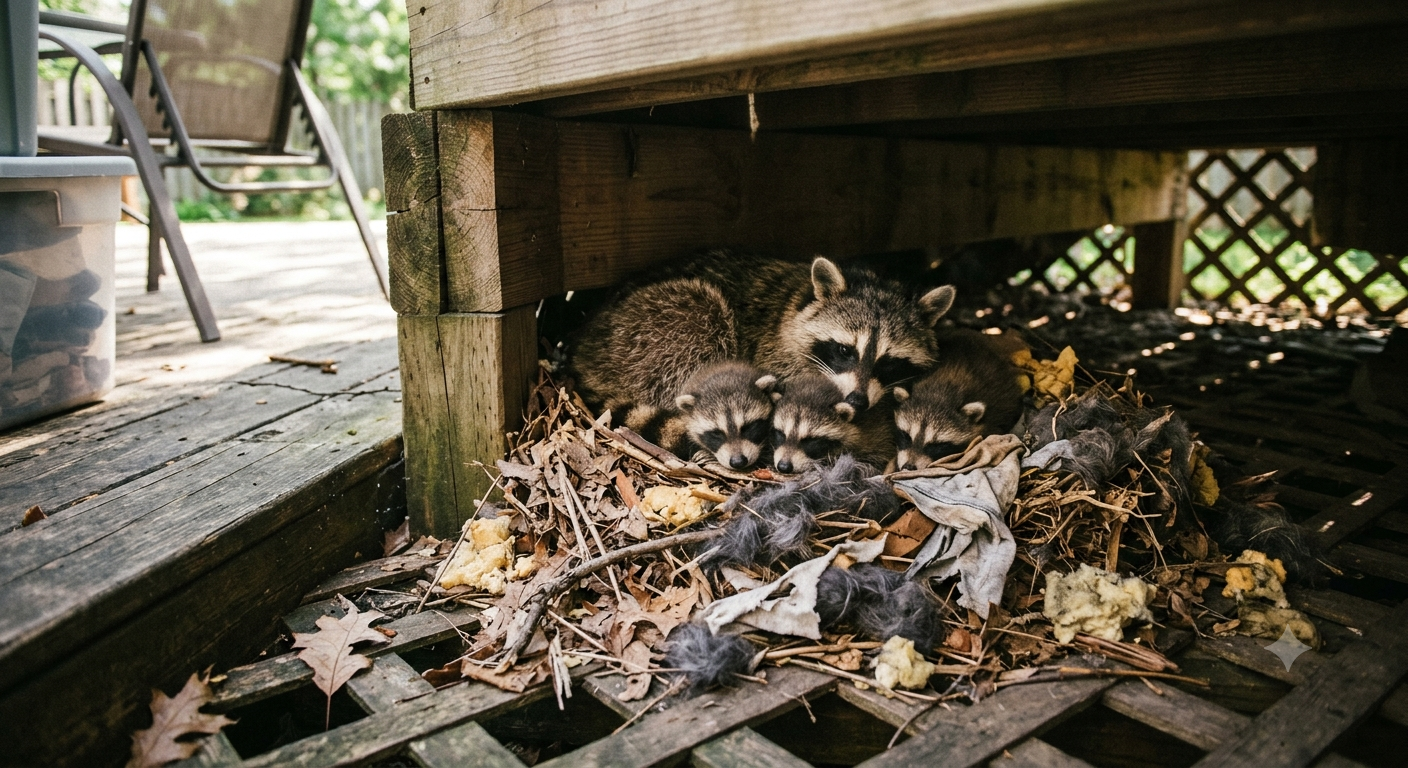
A fox family may temporarily use a space beneath a shed, deck, or porch while the kits are growing.
They may also settle inside a brush pile or an abandoned groundhog burrow.
Homeowners could notice:
- Fox kits playing near a den entrance
- Adult foxes carrying food
- Repeated activity beneath a deck, shed, or porch
- Tracks around a possible den
- Animals moving between wooded areas and open yards
Fox kits can appear playful, curious, and less cautious than adult foxes, but you should never approach or attempt to handle them.
A Young Animal Is Not Always Abandoned
Seeing a small animal alone or active during the day does not necessarily mean it has been abandoned. In many cases, the adult remains nearby, watches from a distance, brings food, or returns later.
If the young animal appears alert, healthy, and mobile, leaving it alone is usually the best response. Professional guidance may be necessary if the animal appears injured, weak, trapped, bleeding, or in immediate danger.
AI-Generated Image
What to Do When Young Wildlife Appears
Keep your distance and give the animal room to move away on its own.
Children and pets should remain away from the area, especially when a den or nesting site may be nearby.
Homeowners should never feed wildlife or attempt to raise a young animal themselves. Pets should not be allowed to chase or corner the animals in question either.
If the animals are using a space beneath a deck, shed, porch, or crawlspace, do not seal the opening while the den is active.
Trapping young wildlife inside could separate it from the adults and create a more serious problem.
The area should first be inspected to determine whether animals are still present.
Once they have left, the access point can be properly corrected to prevent the same location from becoming a den again next season.
Contact Wilkins Wildlife & Pest Solutions Inc.
If you are unsure whether young wildlife has created a den near your home, Wilkins Wildlife & Pest Solutions Inc. can inspect the area and help determine the safest next step.
Founded in 2017, the local company has more than 13 years of experience with wildlife removal, exclusion, and pest control throughout Sussex County and the Eastern Shore.
Its team works with foxes, raccoons, skunks, opossums, squirrels, birds, bats, snakes, moles, and other animals & creatures that may settle near homes or businesses.
A full list from their website of animals they help with can be found below:
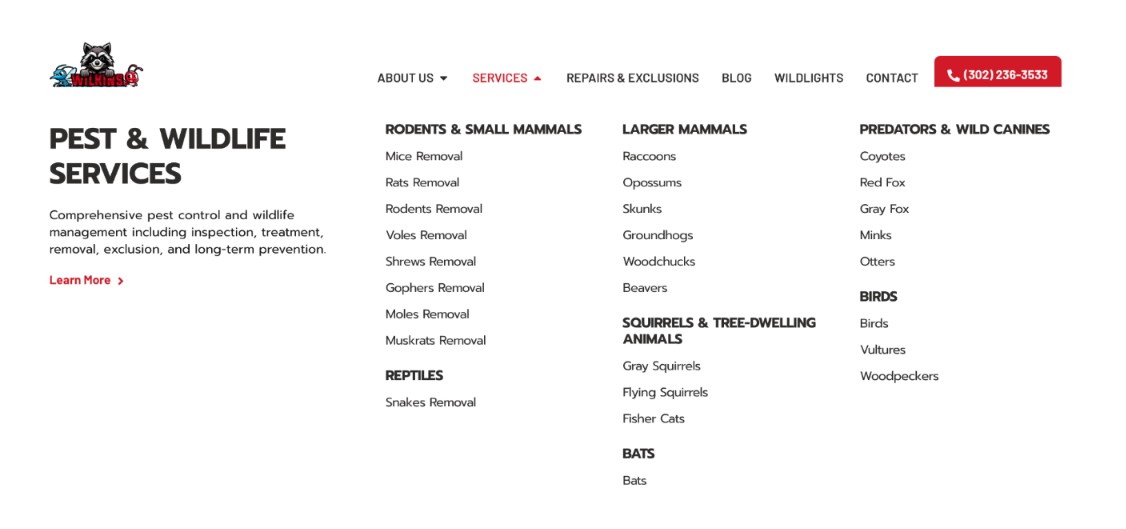
Image: Wilkins Wildlife & Pest Solutions
An inspection can confirm whether a den or access point is active, especially beneath a deck, shed, porch, or crawlspace.
This can help you avoid sealing an opening too soon and determine when it is safe to correct the area so animals cannot return.
You can read more about their humane & eco-friendly removal practices and other vital information about this provider here.
Contact phone numbers:
- Bethany: (302) 490-1800
- Milford: (302) 858-7690
Keep following the blog for more seasonal advice, local resources, and helpful information for Coastal Delaware homeowners.
Have any questions about our blog(s), the Coastal Delaware real estate market, or local life in our beautiful beach towns? Do you think there is something we should write about? Did you see an event coming up that we should know about? Shoot us an email at [email protected] or give us a call at (302) 212-0074. We would love to hear from you!
Check out this article next