

Coastal Delaware continues to see steady development pressure, and the latest proposals highlight the same balancing act playing out across Sussex County: adding housing while managing traffic, school capacity, infrastructure costs, and open space.
Below are four updates to watch, including one project headed to Planning and Zoning this week, one large-scale buildout expected to take two decades, a newly approved rezoning vote, and fresh inventory coming to an established active adult community.
The Granary’s 1,350 Homes and a 20-Year Buildout Timeline
One of the largest developments in the region is already underway.
The Granary is planned as a 1,350-home community on a roughly 450-acre site within the town limits of Milton after the property was annexed in 2022.
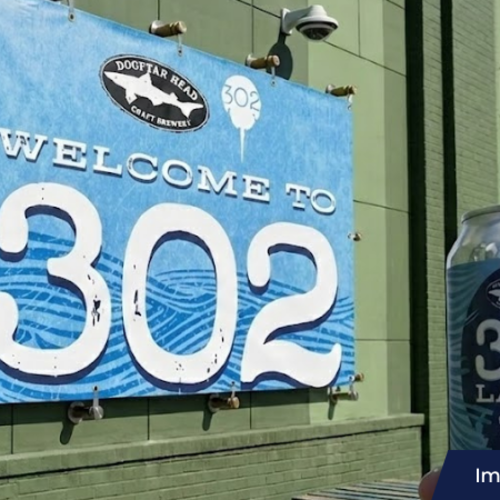
The developer, Convergence, has positioned the project as both a neighborhood and a broader extension of Milton, with walkable connections meant to bring residents into town for everyday life, like local coffee shops, breweries, parks, schools, and community ballfields.
The Granary’s design language centers on nature-forward planning, including native wildflower meadows and sustainable landscaping, plus a strong emphasis on outdoor movement and water access.
For example, the Broadkill River is highlighted as a nearby option for kayaking and wildlife spotting, described as just minutes from the community.
Amenities are framed around wellness, balance, and social connection, and Phase 1 amenities are described as already in progress.
Plans and features discussed publicly and promoted by the developer include a clubhouse with swimming pools, a fitness gym, and community gardens, along with parks and playgrounds, serene green spaces and ponds, and designated yoga and meditation platforms.
The community also emphasizes walkability and time outdoors, with walking and biking paths, a large amount of preserved open space (including a stated 110 acres of open space), and access to a nearby fishing pond, plus nighttime “dark-sky” appeal in the form of wide-open coastal countryside views.
The “public-facing” side of the project is where The Granary stands out compared to many large developments outside town boundaries.
In addition to trails and recreational areas, plans have included a pedestrian tunnel under Sand Hill Road and trail connections along Diamond Pond, as well as community-scale gathering spaces such as an amphitheater and pavilion, multiuse fields, a skate park, and a bouldering wall.
A new town center is also part of the vision, intended to support day-to-day needs and create more of a shared hub than a typical subdivision layout.
The Granary also sets aside significant space for jobs and entrepreneurship, including a stated 60,000 square feet of commercial space and concepts like a craft park with beverage and food trucks.
Earlier public discussions have also mentioned a shared brewery incubator concept aimed at helping startup breweries move into commercial production and interest in locally oriented tenants such as specialty grocery, coffee, and restaurants.
The buildout is expected to take about 20 years, with early phases already underway and D.R. Horton and DRB Homes actively selling homes.
You can check out a community’s video that explains the inspiration and vision behind The Granary here.
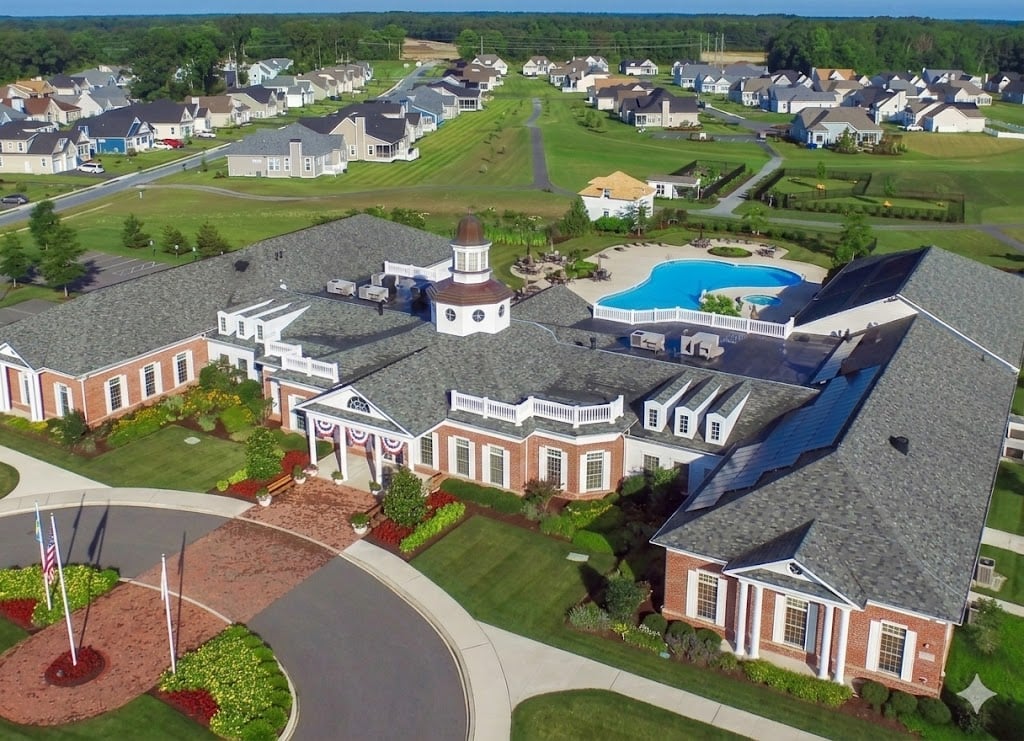
Image Generated by AI
More Inventory Coming to Independence, a 55+ Community With Resort-Style Amenities
Independence is adding 36 additional homesites, offering another chance to join an established 55+ community known for an active calendar of social events and lifestyle programming.
The community is planned to include 491 total single-family homes, with these homesites part of the final phase release.
The hub of the neighborhood is Independence Hall, a 24,000-square-foot, award-winning clubhouse focused on wellness, recreation, and gathering space.
Amenities listed in the community include:
- Indoor and outdoor pools
- State-of-the-art fitness center
- Locker rooms with wet saunas and showers
- Yoga and dance studio
- Massage room
- Bar with grill
- Grand ballroom with a commercial kitchen
- Library
- Walking trails
- Tennis and pickleball courts
- Community garden
- Neighborhood dog park
- Barbecue grill area
- Horseshoe pits
- Sand volleyball courts
Home options are described as ranch and two-story floor plans ranging from about 1,600 to 4,000+ square feet, all with first-floor primary living, with personalization options such as additional bedrooms, lofts or bonus rooms, and outdoor living areas.
For buyers looking at costs, the HOA fee is $433 per month, covering “carefree living” items like grass cutting, lawn care and landscaping, mulching, snow removal in common areas, and weekly garbage removal, plus community operations and shared expenses tied to amenities and programming, along with administrative items such as insurance, taxes, legal, and miscellaneous expenses.
Downtown Rehoboth Beach is about 12 miles away, and Lewes beaches are approximately 13 miles from the community.
Utilities are listed as:
- Electric: Delaware Electric Cooperative
- Gas: Poore’s Propane
- Water and Sewer: Artesian
- Internet: Verizon Fios
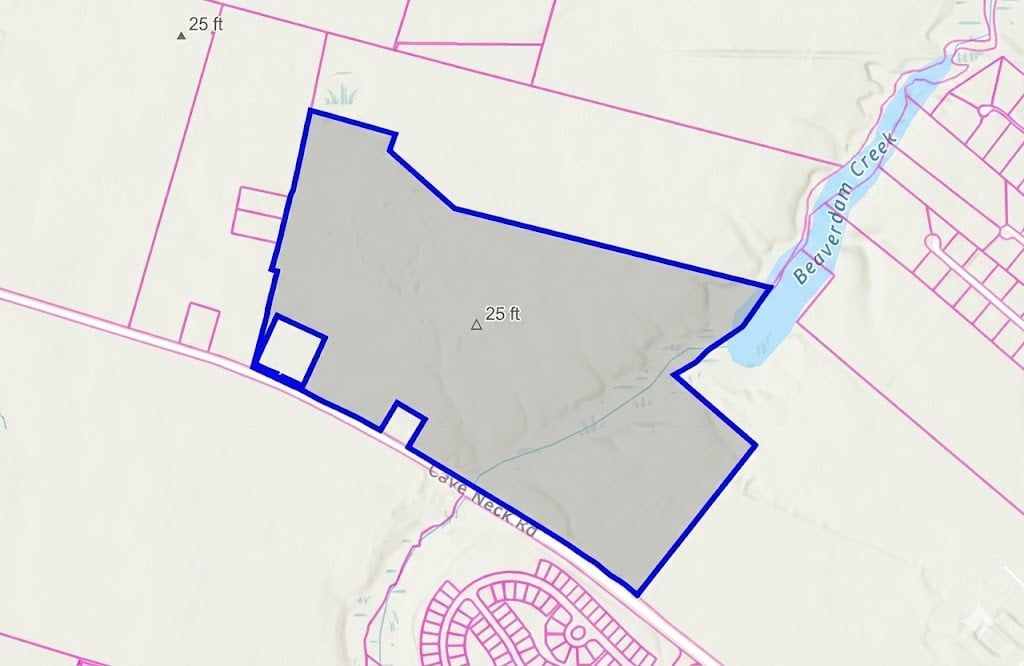
Image Generated by AI
A 187 Home Plan on the Former Totem Farms Property
A developer is seeking approval for a cluster subdivision called Rivers Edge on the former Totem Farms site along Cave Neck Road, proposing 187 single-family homes on roughly 125 acres at 16300 King Cole Drive.
County documents describe a cluster approach, which typically groups homes in a way that preserves portions of open space rather than spreading lots evenly across an entire parcel.
DelDOT documents submitted to the county classified the project as having only a minor traffic impact, though traffic remains a frequent concern in eastern Sussex as new neighborhoods continue to come online.
The project also drew attention because it previously went through a state Preliminary Land Use Review in 2024, where the director of the Office of State Planning Coordination, David Edgell, raised fiscal concerns about building in a rural location.
He warned that providing services and maintaining infrastructure in rural areas can become inefficient over time, with long-term costs becoming more apparent as communities mature.
School capacity is another theme tied to ongoing residential growth.
After the Planning & Zoning hearing, the commission will decide whether to recommend approval, denial, or changes before the proposal moves forward in the county’s review process.
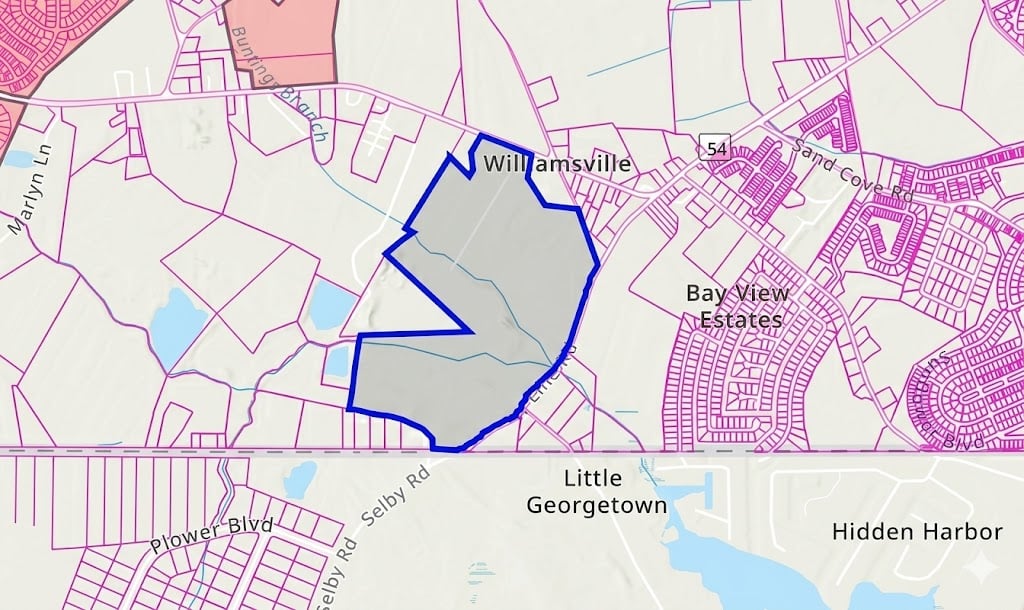
Image Generated by AI
Swan Lake Approved, With Open Space and Traffic Concerns Front and Center
Sussex County Council approved the Swan Lake proposal in October 2025, bringing 352 total dwellings to the eastern Selbyville area.
The Sussex County Planning and Zoning Commission supported the plan with a condition tied to preserving Chicken Farm Road, a nearby roadway.
Supporters and council members pointed to the project’s layout and open space as positives, including 191 townhomes at higher density that helped allow 62% open space. Another point raised during discussion was the site’s reuse of an abandoned quarry or sandpit.
At the same time, traffic concerns remained a major part of the conversation, especially along Route 54, which council members described as heavily congested in summer.
The rezoning passed on a 4 to 1 vote, underscoring a familiar pattern countywide: projects may win approval even with significant transportation concerns still unresolved.
What to Watch Next
With proposals moving through hearings and major communities already under construction, the next questions tend to be consistent across projects: traffic mitigation, long-term infrastructure costs, school capacity, and how much open space is preserved as growth continues.
Want to stay on top of what’s being built next in coastal Delaware? Follow the blog for ongoing coverage, project updates, and local planning news!
Sources: Coast TV, Delaware Online, Delaware Public Media
Check out this article next