
On Wednesday, April 1st, 2026, the Sussex County Planning & Zoning Commission held a public meeting at the Council Chambers inside the Sussex County Administrative Office Building in Georgetown.
The meeting covered a mix of conditional use applications, development proposals, and ordinance discussions that could shape future growth, housing, and land use across the county.
Rivers Edge
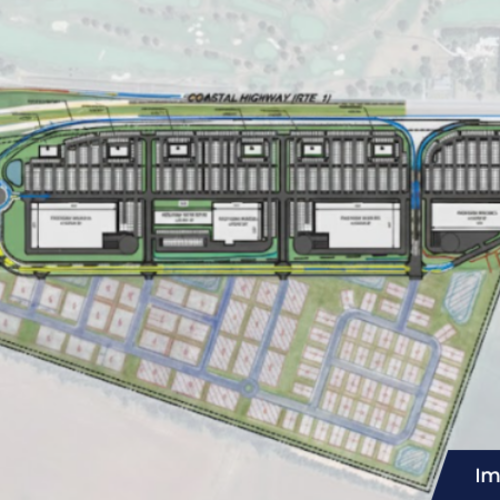
Rivers Edge is a proposed cluster subdivision that would bring 187 single-family homes to a 125.13 acre parcel located along the northeast side of Cave Neck Road near Milton.
The property is zoned AR-1, which typically allows for lower-density residential development, but the cluster subdivision design allows for smaller individual lots while preserving portions of open space across the site.
The project has drawn attention due to its scale, location, and environmental considerations, particularly related to wetlands on the property.
At this meeting, the Commission revisited the application following a previous discussion where questions were raised about the accuracy and methodology of the wetlands calculations submitted by the applicant.
In response, staff had provided an updated memo clarifying those calculations, which was entered into the record.
The Commission had also previously voted to leave the public record open to allow for additional community input, recognizing the level of interest and concern surrounding the project.
Since that last meeting, additional public comments were submitted and formally added to the record, and commissioners confirmed that the public comment period had officially closed prior to this meeting.
With the updated information and expanded record now in place, the commission had the option to move forward with a decision but instead chose to hold off.
A motion was made to defer action on the Rivers Edge application, and it was approved by a majority vote.
This means that no final decision has been reached at this time, and the project will return for further review and discussion at a future Planning and Zoning meeting.
Image generated by AI
SCRP
Ordinance 2601 focused on proposed changes to the Sussex County Rental Program, also known as SCRP.
The program is intended to support affordably priced rental housing in Sussex County, but county staff explained that it has produced very limited results since it was created in 2008.
According to the discussion, only one SCRP project has been completed so far, with another still in progress.
The proposed ordinance came out of the Land Use Reform Working Group’s recommendations and is meant to make affordable and workforce housing projects more financially realistic for developers.
The changes would reduce the required affordable unit set aside from 25% to 15%, adjust rent calculations from 50% to 60% of area median income, reduce open space requirements, and revise certain setback standards.
Several speakers said the current program has not done enough to create new rental housing and agreed that changes are needed.
Developers and housing advocates described the proposal as a step in the right direction, but some argued that it still may not go far enough to make projects viable.
Suggestions included allowing rents based on 80% of area median income, reducing fees, allowing more height, increasing density, and giving developers more flexibility in how projects are designed.
Other concerns focused on whether the county has enough clear data to guide these decisions.
Some speakers questioned how many rental units are actually needed at different income levels and whether lowering the affordable unit requirement to 15% would be enough to meaningfully address Sussex County’s housing shortage.
After hearing public comment and discussing the proposed changes, the Planning and Zoning Commission closed the public hearing but did not make a final recommendation.
The Commission voted to defer action on Ordinance 2601, meaning the SCRP changes will return for further consideration at a future meeting.
Cluster Subdivision
Ordinance 2602 focused on proposed changes to cluster subdivision rules in Sussex County, especially in rural areas.
The ordinance would eliminate cluster subdivisions with 7,500 square foot lots in rural areas when those developments are connected to central sewer. Larger lot options, such as 20,000 square foot lots or three-quarter acre septic lots, would still be allowed.
The goal of the ordinance is to reduce housing density in rural parts of the county and better separate areas intended for growth from areas intended for conservation.
The proposal also removes Residential Planned Communities, known as RPCs, from rural areas, which is intended to prevent developers from using that process to avoid the new density restrictions.
During the discussion, county staff connected the ordinance to broader land use reform recommendations, including the idea of establishing growth and conservation areas and adjusting density based on location.
However, the change would have a major impact on development potential across large portions of Sussex County.
In practical terms, it could reduce density in some rural areas from about two units per acre to roughly 0.8 units per acre.
Critics raised concerns that the ordinance could worsen the county’s housing shortage by reducing the number of homes that can be built, especially if higher density is not added in designated growth areas at the same time.
Others questioned whether the change would truly reduce land consumption, since the same parcels could still be developed, but with fewer homes spread across the land.
The discussion also touched on bigger policy tradeoffs, including farmland preservation, infrastructure planning, tax revenue, and the long-term shape of growth in Sussex County.
Supporters viewed the ordinance as a way to restore more controlled rural development patterns, while opponents argued that it could create more sprawl and make housing less attainable.
After reviewing the proposal and hearing the discussion, the Planning and Zoning Commission did not make a final recommendation.
The Commission voted to defer action on Ordinance 2602 for further consideration.
Section 99-9C
Ordinance 2603 focused on updating Sussex County’s long-standing subdivision review standards, often referred to as 99.9C.
The main goal of the proposal is to make the ordinance more enforceable by shifting the responsibility onto developers to clearly demonstrate how their subdivision plans meet each required criterion, rather than simply stating that those factors were considered during the design process.
Many of the criteria themselves are not new.
They include considerations such as terrain, potable water availability, sewage disposal, groundwater impacts, effects on property values, school capacity, public services, transportation, and overall compatibility with surrounding land uses.
What is changing is how these standards are applied and documented during the review process.
The ordinance also incorporates several “superior design” elements that were previously tied only to cluster subdivisions, expanding them to apply to all subdivision proposals.
These include protections and considerations related to wetlands, wooded areas, waterways, drainage patterns, scenic views, historic features, road layout, interconnectivity, sidewalks, and direct access to state roads.
During the public hearing, several speakers supported the effort to strengthen these standards but raised concerns about the level of clarity in the proposed language.
Some argued that the ordinance should include more specific requirements, better cross-references to other parts of county code, and stronger expectations related to infrastructure capacity.
The Sussex Preservation Coalition suggested that developers should be required to provide more detailed mapping of natural resources, stronger screening of infrastructure, and clearer coordination with school districts, emergency services, and transportation agencies.
At the same time, representatives from the development community said they also support clearer standards but cautioned that some of the proposed language could create confusion or duplicate existing review processes.
They pointed out that development projects already go through multiple layers of review from agencies such as DelDOT, DENREC, and the Sussex Conservation District and warned that additional unclear requirements could make the process more complicated, time-consuming, and costly.
Some also raised concerns that requiring full infrastructure availability before development could effectively limit growth.
Commissioners and staff discussed the challenge of balancing stronger oversight with practical implementation.
One example raised was the idea of requiring certification from school districts, which staff noted could be difficult since districts do not always respond to county requests.
There was also clarification that certain flexible language, such as requiring features to be “protected as appropriate,” is intentional, especially when dealing with cultural or historic elements that may not always require full preservation.
After closing the public hearing and discussing the proposed changes, the Planning and Zoning Commission did not move forward with a final recommendation.
The Commission voted to defer action on Ordinance 2603 for further consideration at a future meeting.
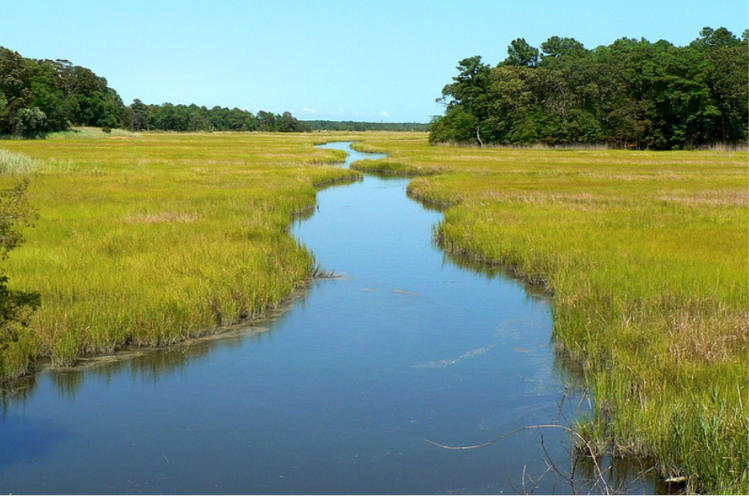
Image: DNREC
Open Space
Ordinance 2604 focused on proposed changes to Sussex County’s open space requirements for subdivisions.
The ordinance is connected to Land Use Recommendation #15, which called for increasing minimum open space requirements to somewhere between 35% and 50%.
Instead of applying the same requirement countywide, the proposal would create different standards based on location, requiring 30% open space in growth areas and 50% open space in rural areas.
The ordinance also looks at how open space is designed, counted, and applied across subdivision projects.
Some existing language from the county’s cluster subdivision code would be moved into the broader open space standards, making the rules easier to apply beyond just cluster developments.
A major part of the discussion focused on stormwater management areas and whether they should count toward required open space.
Under the proposed language, certain wet stormwater retention ponds could count as open space, but only if they are designed to look and function more like natural features.
That would include irregular shapes, gradual slopes, and appropriate landscaping. Basic square stormwater basins or dry ponds would not automatically qualify.
This became one of the biggest discussion points, with several speakers asking for more specific standards to make sure open space provides real value.
The Sussex Preservation Coalition said the ordinance was a step in the right direction but recommended stronger language, especially around landscaping requirements.
They also suggested that stormwater ponds should not receive open space credit when they replace areas that were previously forested.
Others raised concerns about how the county defines “contiguous open space,” arguing that developers can technically connect narrow or fragmented strips of land and count them, even when those areas do not provide meaningful recreational, environmental, or community benefit.
The Home Builders Association raised concerns from the development side, arguing that higher open space requirements, especially in rural areas, could reduce the number of homes that can be built and function as a form of downzoning.
They also noted that stormwater facilities are already required by state law, so excluding them from open space calculations could unfairly penalize developers.
There were also questions about whether green stormwater features, such as rain gardens and vegetated systems, are clearly addressed in the ordinance language.
Commissioners discussed how difficult it is to balance usable open space, forest preservation, stormwater management, ecological value, and flexibility in subdivision design.
Some members agreed that the county may need clearer numerical standards, such as a minimum width for land to count as contiguous open space.
After the public hearing and discussion, the Planning and Zoning Commission did not make a final recommendation.
The Commission voted to defer action on Ordinance 2604 for further consideration.
Stay tuned and keep following the blog for more updates on local meetings, development news, and everything happening across Coastal Delaware.
Have any questions about our blog(s), the Coastal Delaware real estate market, or local life in our beautiful beach towns? Do you think there is something we should write about? Did you see an event coming up that we should know about? Shoot us an email at [email protected] or give us a call at (302) 212-0074. We would love to hear from you!
Check out this article next